

Contents
After a small kitchen fire, you may still notice a sharp smoke smell even after the flames are out. You can reduce fire odor by ventilating the space, using HEPA filtration, and wiping hard surfaces with a microfiber cloth and mild cleaner. For deeper odor in walls, ducts, or porous materials, activated charcoal, fogging, or ozone treatment may be needed, but the right choice depends on where the smoke settled.
Key Takeaways
- Ventilate the space and use HEPA filtration to remove airborne smoke particles and soot.
- Place activated charcoal or baking soda nearby to absorb lingering fire odors.
- Clean hard surfaces with a mild cleaner and microfiber cloth, testing a hidden spot first.
- Seal smoke-stained walls with odor-blocking primer and replace HVAC filters.
- Call fire odor removal professionals for persistent smells, including fogging or ozone treatment.
How to Remove Fire Odor Fast
To remove fire odor fast, you need to target both airborne smoke particles and the residue embedded in surfaces.
You can start by ventilating the area, then place bowls of activated charcoal for charcoal absorption, which helps trap volatile compounds that keep the smell alive.
Next, run HEPA filtration if you have it; it’ll pull fine particles from the air and support a cleaner indoor environment.
A mild vinegar solution can neutralize lingering acidic notes when you lightly wipe nonporous items.
Use controlled moisture, not soaking, so you don’t spread contamination.
If you act quickly and methodically, you’ll help your space feel safer and more like home again.
Clean Smoke Residue From Surfaces
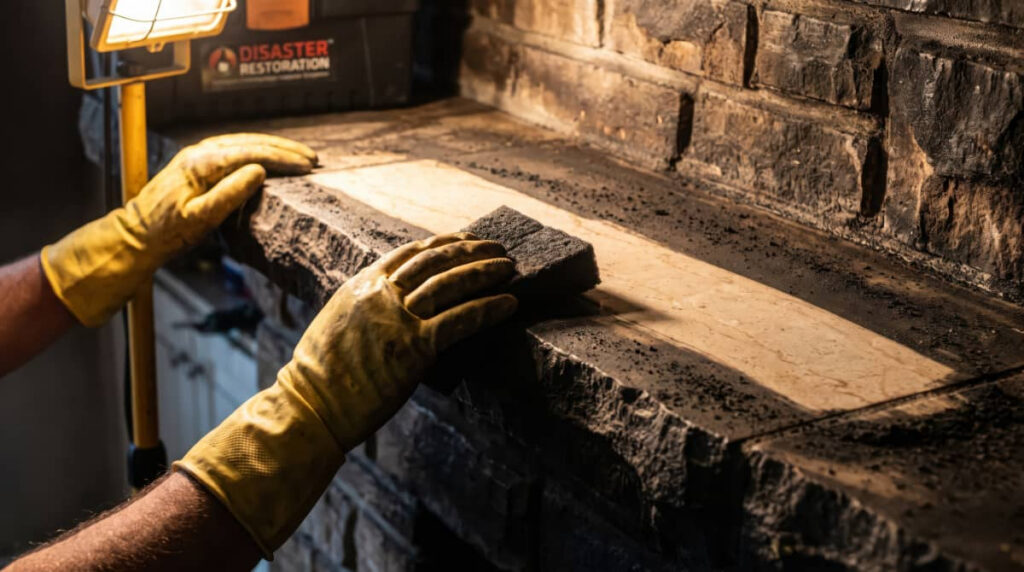
Wipe smoke residue from hard surfaces with a microfiber cloth dampened with a mild cleaner so you lift soot instead of pushing it around. You’ll protect surface materials by matching cleaning techniques to the finish, texture, and porosity you’re handling.
Work in small sections, and keep the cloth slightly moist, not wet, so residue doesn’t smear. Follow this sequence:
- Test a hidden spot.
- Wipe from clean areas inward.
- Rinse the cloth often.
- Dry the surface right away.
You’re not just cleaning; you’re restoring a space that feels like yours again. Use fresh cloths as soon as they darken, because trapped particles can redeposit odor-causing soot.
Stay methodical, and you’ll leave each surface cleaner, safer, and more familiar.
Treat Walls and Ducts for Smoke Odor
Once the visible soot is gone, turn to the walls and ductwork, because porous paint, drywall, and HVAC dust can hold smoke odor long after surfaces look clean.
You’ll get the best results by sealing stained drywall with odor-blocking primer and then applying compatible wall treatments that lock in residual compounds.
Check trim, closets, and other hidden edges too, since smoke can linger there.
For the HVAC system, schedule professional duct cleaning so debris isn’t recirculated every time you run the fan.
Replace filters, inspect returns, and clean supply registers.
This process helps your space feel safe again and supports the fresh start you’re aiming for.
When you address both wall treatments and duct cleaning, you reduce hidden odor sources with precision.
When Ozone, Fogging, and HEPA Make Sense
After you’ve handled the walls, ducts, and other visible sources, you can consider specialized odor-control methods for smoke that’s still embedded in the air or deep in materials.
You’ll usually get the best fit when you match the tool to the space:
HEPA filtration captures fine soot and residual particles.
Fogging techniques distribute deodorizing agents into porous surfaces.
Ozone effectiveness can help with stubborn odor, but only in vacant, sealed areas.
Combined use works when lingering smell comes from both airborne contamination and absorbed residue.
You’re not alone in this stage; many homes need one more pass after cleanup.
Keep the space unoccupied, ventilated afterward, and follow equipment directions closely.
That approach helps you target odor without adding avoidable risk or masking the problem.
When to Call Fire Odor Removal Pros
If smoke odor still returns after you’ve cleaned visible residue, aired out the space, and used targeted treatments, it’s time to call fire odor removal pros.
You may be dealing with hidden contamination in insulation, ductwork, framing, or porous materials that trap soot after fire damage.
Professionals use thermal fogging, ozone, hydroxyl generators, and source removal to reach what DIY methods can’t.
They also inspect moisture, corrosion, and air pathways so the restoration process addresses odor at its origin, not just on surfaces.
When you need your home to feel safe, clean, and fully yours again, expert help can restore indoor air quality with measurable, systematic steps.
Calling sooner can shorten downtime, reduce recurring smells, and protect your property’s long-term condition.
Frequently Asked Questions
How Long Does Fire Odor Usually Linger Indoors?
It usually lingers days to months, depending on soot, ventilation, and cleaning. You can reduce fire odor persistence by improving indoor air quality quickly, but porous materials may keep smells trapped longer than you’d expect.
Can Fire Odor Affect Health After Cleanup?
Yes, fire odor can affect your health after cleanup if residual soot and VOCs remain. You may face health risks like irritation or headaches, but thorough remediation usually prevents long term effects and restores comfort.
Will Upholstery Need Replacement After Smoke Exposure?
Not always; you may keep it with professional upholstery restoration. Smoke damage can be cleaned if fibers aren’t deeply charred or contaminated. You’ll usually need replacement only when odors, staining, or structural damage can’t be fully restored.
How Soon Should Fire Odor Removal Start After Damage?
You should start fire odor removal immediately; your fire damage timeline doesn’t improve by letting smoke marinate like a bad joke. You’ll protect materials, improve odor removal techniques, and fit right back into a safer, restored space.
Does Insurance Cover Professional Fire Odor Removal?
Yes, your insurance policies may cover professional fire odor removal, but coverage limits vary. You should review your policy, document damage, and ask your adjuster promptly. You’re not alone—specialists can help verify eligible restoration costs.
Review
To remove fire odor after damage, you need to act fast: ventilate the space, run HEPA filtration, and clean smoke residue from every hard surface. Use activated charcoal to help absorb lingering compounds, and treat walls, ducts, and hidden areas that trap odor. If the smell still hangs on like an elephant in a hallway, ozone or fogging may help. When contamination runs deep, call fire odor removal pros for a thorough, safe restoration.