

Contents
After a hurricane, you may find several inches of water in your basement with power still on. Rapid water damage cleanup should begin by shutting off electricity when it’s safe to do so, stopping the water source if possible, and keeping everyone away from unstable areas. Then remove soaked materials, address hidden moisture, and clean contaminated surfaces before mold and structural damage spread. If sewage or heavy flooding is involved, specialized mitigation may be the next critical step.
Key Takeaways
- Shut off electricity and the water source safely, then document damage from a distance and mark hazardous areas.
- Move furniture and valuables to dry areas, and use towels or a wet vacuum to remove shallow standing water.
- Remove soaked porous materials like carpet and drywall quickly, and bag contaminated debris for proper disposal.
- Clean and disinfect affected surfaces with detergent and water, working from clean to dirty areas using fresh cloths.
- Call emergency water mitigation professionals for widespread, unknown, or sewage-related damage to stop hidden moisture and structural loss.
Storm Flooding: What To Do First
After a storm flood, your first priority is safety: shut off electricity if you can do so without entering standing water, avoid unstable structures, and keep out of contaminated areas.
Then, document conditions with photos from a safe distance and note any immediate hazards for your insurance claim.
Put on protective gear before you re-enter, including boots, gloves, and a mask if debris or mud is present.
Check on family members, neighbors, and pets, because recovery goes faster when everyone is accounted for.
Use storm preparedness tips to guide your decisions, such as keeping emergency contacts accessible and knowing evacuation routes.
During post storm recovery, stay calm, move deliberately, and follow official instructions.
You’re not handling this alone; coordinated action helps your household regain control safely and efficiently.
Stop The Water Source And Spread
First, you should shut off the supply lines to stop additional water from entering the affected area.
Next, block water migration by using barriers or absorbent materials to keep the damage from spreading.
Quick control at this stage can limit structural impact and make cleanup far more manageable.
Shut Off Supply Lines
If the leak is still active, shut off the nearest supply valve right away to stop additional water from feeding the damage.
Locate the affected supply line and turn the handle clockwise until it stops. If the valve resists, don’t force it; use the main emergency shutoff instead so you can isolate the water safely.
After the flow stops, open a nearby faucet briefly to relieve trapped pressure and confirm the line is closed.
If you share the space with others, tell everyone the water is off so no one reopens it by mistake.
Keep a flashlight and wrench nearby for quick access, and stay calm—you’re taking the right first step to protect your home and give your cleanup team a stable starting point.
Block Water Migration
Once the supply is shut off, focus on containing the water so it can’t travel farther into the structure. You can place water barriers, such as sandbags, absorbent socks, or plastic sheeting, at doorways, thresholds, and low points to redirect runoff.
Move furniture, rugs, and valuables to dry zones, then lift items on blocks so moisture doesn’t wick upward. Open cabinets and interior doors to reduce hidden pockets where water can pool. If safe, use towels or a wet vacuum to pull back shallow water along edges and corners.
Good moisture control starts with isolating the affected area before it spreads through framing, flooring, and insulation. When you act quickly and work methodically, you protect your home and stay part of the recovery team.
Make The Area Safe Before Cleanup
Before you start any cleanup, make the space safe by shutting off electricity to the affected area, stopping the water source if you can do so safely, and wearing protective gear such as gloves, boots, and a mask.
Then do a quick hazard assessment so you and your crew can move with confidence. Check for live wires, gas leaks, unstable ceilings, and sharp debris. These safety precautions protect everyone and keep the response organized.
- Verify power is off at the breaker.
- Confirm the floor won’t collapse or shift.
- Mark unsafe zones so no one enters.
When you coordinate these steps, you reduce risk and create a controlled workspace.
You’re not handling this alone; your team can work together calmly and efficiently.
Remove Wet Materials That Won’t Dry
Next, remove any wet materials that won’t dry out quickly or safely, because lingering moisture can spread damage and lead to mold growth.
You should sort wet materials by type, then separate porous items like carpet, padding, insulation, drywall, and upholstered furniture from salvageable contents.
Bag small debris promptly, and follow local disposal methods for contaminated items, including flood-soaked textiles and food packaging.
Wear gloves and a mask while you handle these materials, and keep clean items away from the affected area.
If an item holds foul odors, shows swelling, or crumbles when touched, treat it as unsalvageable.
Acting decisively helps your space recover faster and keeps your household aligned, informed, and protected together after the storm.
Dry Out Rooms And Hidden Moisture
With the wet materials removed, you can dry the room thoroughly by moving as much air as possible and targeting trapped moisture.
Place fans to create crossflow, run a dehumidifier, and keep indoor humidity low. Use moisture detection tools to check baseboards, wall cavities, and subfloors so you don’t miss hidden dampness. Your drying techniques should focus on steady airflow, warm temperatures, and repeated checks until readings stabilize.
- Open interior doors to connect spaces.
- Aim air behind furniture and into corners.
- Verify dry conditions with a meter.
You’re not doing this alone; every careful pass helps your home return to a safe, familiar state.
Stay patient, keep tracking progress, and trust the numbers more than appearances.
Clean Mud, Silt, And Contaminated Surfaces
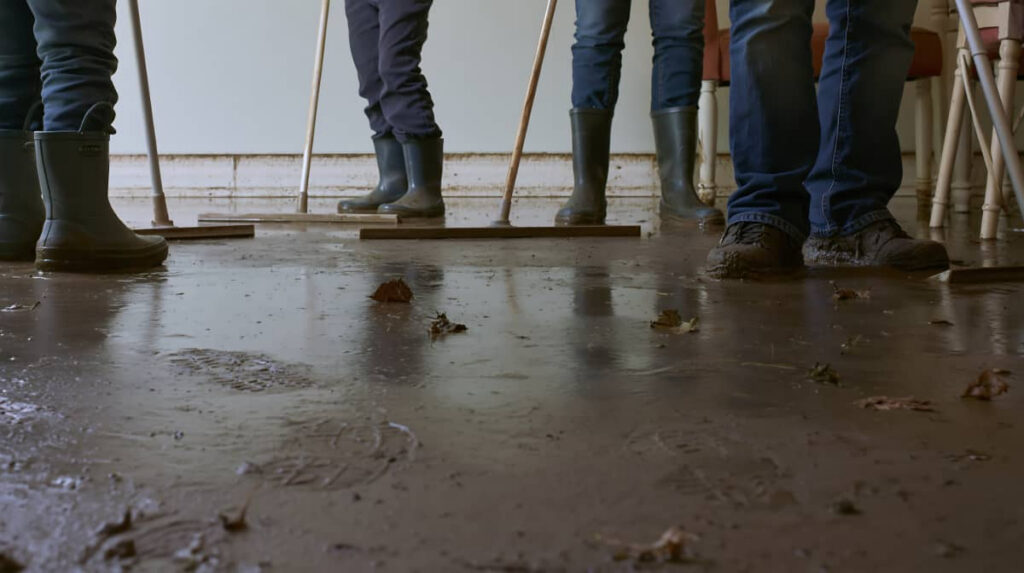
You’ll want to remove mud and silt with controlled, safe scraping and wet pickup methods that limit airborne particles and spread.
Clean all affected surfaces with detergent and water first, then disinfect any areas exposed to contaminated floodwater or sewage.
Keep each pass methodical so you can verify the surface is fully cleaned and ready for the next step.
Safe Mud Removal
Before you begin cleanup, make sure the mud is stable and safe to handle. Then clear loose debris and isolate any contaminated areas to prevent spreading silt, sewage, or flood residue.
You can protect your team by checking PPE, ventilation, and footing before you touch anything. For mud safety, keep children and pets away, and work from the outer edge inward to control tracking.
- Shovel thick deposits into lined containers.
- Scrape remaining film with firm, low-angle removal techniques.
- Bag saturated absorbents and seal them promptly.
Use clean water sparingly to loosen packed silt, then wipe surfaces with disposable cloths and replace them often.
Stay methodical, because steady progress reduces strain and helps your crew stay confident, coordinated, and safe.
Disinfect Contaminated Surfaces
After the visible mud and silt are gone, disinfect all contaminated hard surfaces with an appropriate cleaner or disinfectant to reduce residual bacteria, viruses, and mold growth.
You should work from the cleanest area toward the dirtiest, using fresh cloths and solution often so you don’t spread contamination.
Choose disinfection methods approved for the affected material, and follow label contact times exactly for reliable surface safety.
Nonporous counters, floors, and fixtures usually respond well to chlorine, quaternary ammonium, or hydrogen peroxide products when used correctly.
Wear gloves, eye protection, and ventilation as needed.
If you’re restoring a shared home, this step helps protect everyone and brings the space back to a safe, livable condition.
Afterward, rinse food-contact surfaces and let everything dry fully.
Deal With Sewage And Dirty Water
If the water came from a toilet, sewer line, or any outdoor source, treat it as contaminated and handle it as an immediate health hazard. You and your household can stay safer by following sewage safety steps for dirty water:
- Wear gloves, boots, and eye protection before contact.
- Keep children and pets away from the area.
- Remove porous items that hold contamination, then wash hard surfaces with detergent and safe disinfectant.
Avoid splashing, and don’t mix chemicals. Use disposable towels, seal waste in bags, and wash your hands well after cleanup.
If you share the space, explain the hazard clearly so everyone can help protect one another. With steady, careful action, you’ll reduce exposure and keep your home’s recovery organized, controlled, and reassuring.
Call Emergency Water Mitigation When Needed
When the damage is widespread, the water source is unknown, or sewage has spread beyond a small area, call an emergency water mitigation service right away.
You’ll get an emergency response that stabilizes the site, documents conditions, and reduces further structural loss. Trained technicians can test moisture, isolate hazards, and start extraction before hidden water migrates into walls, flooring, and framing.
If you wait, contamination can intensify and repairs can become more complex. With professional assistance, you’re not handling the risk alone; you’re joining a team that knows how to restore safe conditions quickly.
Their equipment and protocols help protect your home, your health, and your next steps. Prompt action gives you control, confidence, and a clear path forward after severe weather.
Frequently Asked Questions
How Do I Document Water Damage for Insurance Claims?
Take clear photos and videos, note dates, list affected items, and save receipts; your insurance documentation should include a detailed damage assessment. You’ll feel supported when you organize evidence promptly and contact your adjuster.
When Should I Replace Drywall After Flooding?
Replace drywall after flooding when your drywall assessment shows swelling, crumbling, or mold, or moisture detection stays elevated after drying. You’ll protect your home and community by removing compromised sections promptly.
Can I Safely Use My HVAC After Water Damage?
You shouldn’t run your HVAC until you’ve completed an HVAC safety check and moisture assessment. You could spread contamination or damage. Have a qualified technician inspect, dry, and sanitize the system first for safe, confident use.
How Do I Prevent Mold After Cleanup?
Keep surfaces dry, improve airflow, and use dehumidifiers for humidity control. You’ll strengthen mold prevention by cleaning with approved disinfectant, removing soaked materials, and checking hidden cavities daily. You’re not alone; steady monitoring keeps your space safe.
What Should I Keep After Disaster-Related Water Loss?
You should keep salvage items, valuable documents, essential appliances, and sentimental belongings—like a few dry photos glowing through the wreckage. You’ll protect what’s intact, verify safety, and set aside irreplaceable pieces for recovery.
Conclusion
After severe weather, your fastest move is the safest one: stop the water, cut power, and remove saturated materials before mold and structural damage spread. Floodwater can begin contaminating surfaces in as little as 24 to 48 hours, so every minute matters. By drying hidden moisture, cleaning contaminated areas, and calling emergency water mitigation when needed, you protect your property and health. If you act quickly and methodically, you’ll shorten recovery time and reduce long-term repair costs.