

Contents
Your home is like a fortress, but without proper care, even the strongest walls can succumb to water damage. To protect your ceiling and maintain your home’s integrity, you need to take proactive steps. From inspecting your roof to maintaining your gutters, there are several practical measures you can implement. Let’s explore some effective strategies to keep your living space safe and dry, preventing costly repairs down the line.
Key Takeaways
- Conduct regular roof inspections to identify and address vulnerabilities that could lead to leaks and ceiling water damage.
- Maintain gutters and downspouts to ensure proper water flow away from the roof and foundation, preventing backups and leaks.
- Regularly check for plumbing leaks around sinks, toilets, and appliances to catch issues before they result in ceiling damage.
- Seal cracks and gaps in ceilings and walls with high-quality caulk to prevent water infiltration from external sources.
- Schedule professional inspections to detect hidden leaks and assess the integrity of roofing and plumbing systems effectively.
Regularly Inspect Your Roof
When you regularly inspect your roof, you can catch potential issues before they lead to costly water damage.
Take a close look at your roof materials, whether they’re shingles, tiles, or metal. Each type has its vulnerabilities, and knowing them can help you spot trouble early. Aim to perform visual inspections at least twice a year, preferably in spring and fall. This frequency allows you to detect wear and tear from seasonal changes, such as harsh winters or heavy rains.
During your inspection, check for missing or damaged shingles, rust spots, or signs of moss growth.
Don’t forget to examine flashing around chimneys and vents, as these areas are common leak points. If you find anything concerning, addressing it quickly can save you time, money, and hassle down the line.
Maintain Gutters and Downspouts
After inspecting your roof, turn your attention to gutters and downspouts. Keeping these components in top shape is vital for preventing ceiling water damage.
Regular gutter cleaning is important. Clogged gutters can cause water to back up, leading to leaks and potential damage inside your home. Aim to clean your gutters at least twice a year, or more often if you have overhanging trees.
Don’t forget about downspout maintenance, too. Make certain downspouts direct water away from your foundation; otherwise, you risk water pooling near your home.
Check for any blockages and clear them promptly. If downspouts aren’t functioning properly, consider installing extensions to divert water further away.
Check for Plumbing Leaks
Though often overlooked, checking for plumbing leaks is essential in preventing ceiling water damage. Regular plumbing maintenance can save you from costly repairs down the line.
Start by inspecting visible pipes for any signs of moisture or corrosion. Don’t forget to check under sinks, behind toilets, and around appliances like dishwashers and washing machines.
Consider using leak detection systems that notify you of leaks before they escalate. Pay attention to your water bill; an unexplained increase might indicate a hidden leak.
If you notice any damp spots on your ceiling or walls, act quickly—these could be signs of a plumbing issue.
Seal Cracks and Gaps
To prevent water damage from seeping into your ceiling, sealing cracks and gaps is essential. Start by inspecting your ceilings and walls for any visible cracks. These small openings can allow water to infiltrate, leading to significant damage over time.
For effective crack sealing, use a high-quality caulk designed for your specific surface. Apply it generously, ensuring a smooth finish for a tight seal.
Next, focus on gap-filling around windows, doors, and other areas where water might enter. Use weatherstripping or expanding foam for larger gaps. This protects against water and improves your home’s energy efficiency.
Ensure Proper Ventilation
Ensuring proper ventilation in your home is essential for preventing ceiling water damage, as it helps reduce humidity levels that can lead to mold and rot.
You should regularly check your ventilation systems to make certain they’re functioning effectively. This includes inspecting exhaust fans in kitchens and bathrooms, which play an important role in humidity control.
Consider opening windows when weather permits to encourage air circulation, allowing moisture to escape. If your home tends to trap heat and humidity, installing a dehumidifier can be beneficial.
In spaces like attics or basements, proper airflow is critical; verify vents aren’t blocked by insulation or debris.
By prioritizing good ventilation, you’re protecting your ceilings and creating a healthier living environment for you and your loved ones.
With these simple steps, you’ll foster a sense of belonging in your safe, comfortable home.
Install Water Detectors
Proper ventilation helps keep moisture at bay, but it’s also wise to take additional precautions.
Installing water detectors is one of the best steps you can take to protect your home from ceiling water damage. These devices, often equipped with smart alarms, provide real-time leak detection, alerting you at the first sign of trouble.
Place them in areas prone to leaks, like near water heaters, under sinks, and in basements. Smart alarms can connect to your smartphone, giving you peace of mind even when you’re away.
Regularly test your detectors to verify they’re working correctly and replace batteries as needed. By taking these simple steps, you can create a safer environment for you and your loved ones.
Investing in water detectors helps prevent damage and fosters a sense of community, as you can share these tips with neighbors, creating a proactive approach to home safety together.
Schedule Professional Inspections
While you can take many preventive measures on your own, scheduling professional inspections is essential for maintaining your home’s integrity. Regular inspections help catch potential issues before they escalate into costly repairs or ceiling water damage. It’s a good idea to follow professional recommendations on inspection frequency—typically, once or twice a year.
During these inspections, experts can identify hidden leaks, assess your roof, and evaluate your plumbing systems. Their trained eyes can spot problems you might overlook, ensuring your home remains safe and sound.
Don’t wait for a minor issue to become a major headache. By investing in professional inspections, you’re not just protecting your property; you’re safeguarding your family’s comfort and security.
Plus, this proactive approach fosters a sense of community, as you’re taking responsibility for your home while supporting local professionals. Make inspections a routine part of your home maintenance.
Frequently Asked Questions
How Can I Tell if My Ceiling Has Water Damage?
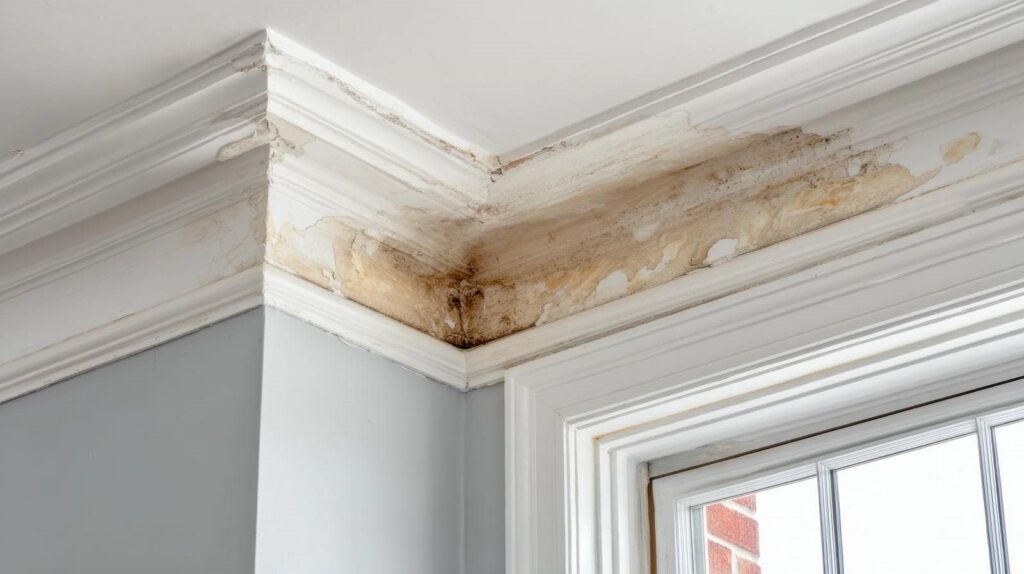
You can tell if your ceiling has water damage by checking for ceiling stains, sagging areas, or mold growth. If you notice any of these signs, it’s time to investigate further and address the issue.
What Are the Signs of a Roof Leak?
You’ll notice signs of a roof leak through water stains, sagging ceilings, or mold. Regular leak detection and proactive roof maintenance can help you avoid costly repairs and ensure your home stays safe and dry.
How Often Should I Inspect My Roof?
You should inspect your roof at least twice a year—unless you enjoy spontaneous indoor rain showers! Regular roof maintenance keeps you dry, so check for issues more often if your area experiences severe weather.
Can Water Damage Affect My Health?
Yes, water damage can affect your health. Mold growth thrives in damp areas, leading to poor air quality. Breathing in mold spores may trigger allergies or respiratory issues, so it’s essential to address any leaks promptly.
What Should I Do if I Find Water Damage?
If you find water damage, act fast! Dry the area and check for leaks. Explore ceiling repair options and prioritize water damage prevention to protect your space, ensuring it remains a cozy sanctuary for everyone.
Wrap-Up
By following these tips, you can greatly reduce the risk of ceiling water damage in your home. Regular inspections and maintenance will help you catch potential issues before they escalate. Don’t you want to keep your living space safe and dry? Investing a little time and effort now can save you from costly repairs later. Stay proactive, and ensure your home remains a secure sanctuary for you and your family.