

Contents
Just as a skilled surgeon relies on precision instruments to diagnose and treat, water damage restoration professionals depend on specific tools for effective recovery. From moisture meters that pinpoint hidden dampness to air movers that accelerate the drying process, each tool plays an essential role. Understanding their functions can greatly enhance your restoration efforts. Discover how these vital tools improve efficiency and elevate your professional credibility in this critical field.
Key Takeaways
- Moisture meters are essential for accurately assessing moisture levels in materials, preventing mold growth and structural issues during restoration.
- Infrared cameras enhance detection of hidden moisture, providing visual documentation and minimizing invasive inspection methods for insurance claims.
- Air movers significantly reduce drying time by enhancing evaporation rates and preventing secondary damage through increased air circulation.
- Dehumidifiers are crucial for effective moisture control, with options ranging from portable for residential use to industrial for larger operations.
- Water extractors efficiently remove excess moisture, with portable models for versatility and truck-mounted options for high-capacity needs.
Moisture Meters
When you’re tackling water damage restoration, understanding the moisture levels in materials is crucial, and that’s where moisture meters come in.
These devices provide accurate moisture measurement, allowing you to assess the extent of damage effectively. By utilizing moisture detection technology, you can identify hidden moisture pockets that may lead to mold growth and structural issues if left unchecked.
Moisture meters typically fall into two categories: pin-type and pinless.
Pin-type meters penetrate materials to get precise readings, while pinless models use electromagnetic signals to scan surfaces without causing damage. Knowing how to select the appropriate meter ensures you gather reliable data tailored to your restoration needs.
Air Movers
After evaluating moisture levels with a reliable moisture meter, the next step in water damage restoration involves effective drying techniques, and air movers play an essential role in this process.
These powerful devices enhance evaporation rates, greatly reducing drying time. You’ll find various air mover types, including centrifugal and axial models, each designed for specific applications.
Centrifugal air movers are ideal for concentrated airflow, making them perfect for drying carpets and walls, while axial types excel in covering larger areas.
The air mover benefits are substantial; they increase air circulation and help prevent secondary damage, such as mold growth.
By strategically positioning these machines, you can create a drying chamber that maximizes efficiency.
Choosing the right air mover type and understanding its benefits ensures you tackle water damage effectively, fostering a sense of belonging within your restoration community as you master these essential tools.
Dehumidifiers
When tackling water damage, understanding the different types of dehumidifiers is vital for effective moisture control.
You’ll want to contemplate key features such as efficiency ratings and capacity to ensure you select the right model for your specific situation.
Each type serves a distinct purpose, making it important to analyze your environment before making a choice.
Types of Dehumidifiers
Dehumidifiers play an essential role in water damage restoration by effectively reducing humidity levels in affected areas.
You’ll encounter two primary types: portable dehumidifiers and industrial dehumidifiers. Portable dehumidifiers are ideal for residential spaces or smaller areas, offering flexibility and ease of transport. They’re perfect for quick responses, helping to mitigate damage in confined spaces.
On the other hand, industrial dehumidifiers are designed for larger-scale operations. Their robust construction and high capacity allow them to handle extensive water damage situations, making them suitable for commercial buildings or large homes.
Selecting the right type depends on the severity of water damage and the area’s size, ensuring optimal restoration results for your environment.
Key Features to Consider
Selecting the right dehumidifier involves considering several key features that directly impact its effectiveness in water damage restoration.
First, assess the unit’s capacity, measured in pints per day, to ensure it can handle the moisture load of your space.
Next, look for energy efficiency ratings; a high-efficiency model reduces operational costs and promotes sustainable practices.
Portability is essential too, as you’ll want easy maneuverability during restoration techniques.
Additionally, check for built-in hygrometers and automatic shut-off features, which enhance equipment maintenance and usability.
Finally, consider noise levels, especially in residential areas.
Water Extractors
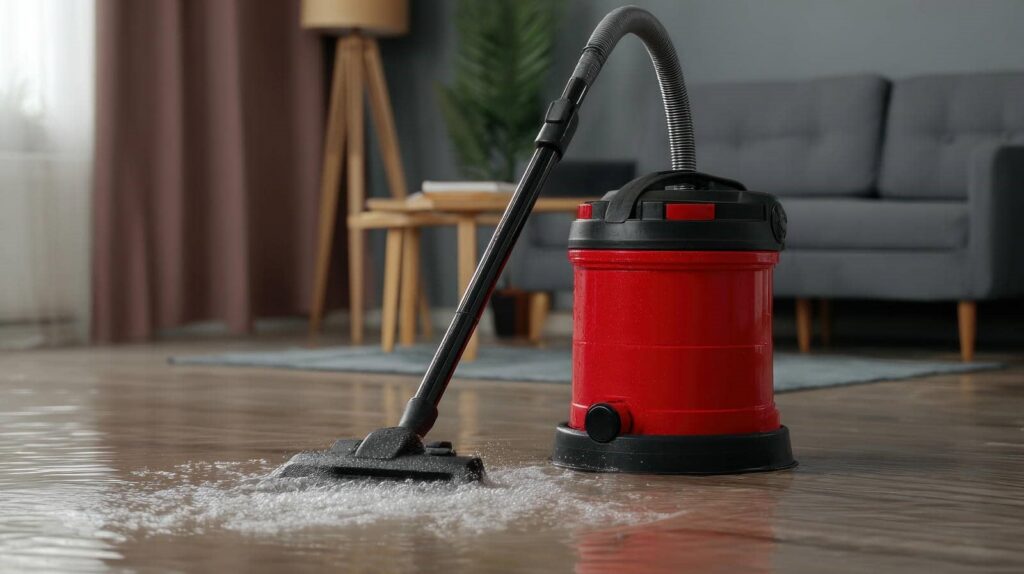
Water extractors are vital tools in the water damage restoration process, designed to efficiently remove excess moisture from affected areas.
You’ll encounter various types of extractors, each with specific applications and capabilities, making it important to understand their key features.
Evaluating these factors will help you choose the right equipment to ensure effective water removal and restoration.
Types of Water Extractors
When dealing with water damage restoration, understanding the various types of water extractors available is essential for effective remediation.
You’ll encounter two primary categories: portable extractors and truck mounted extractors.
Portable extractors are versatile, allowing you to maneuver easily in tight spaces, making them ideal for residential projects. They typically have a lower capacity but are perfect for smaller jobs.
On the other hand, truck mounted extractors offer increased power and efficiency, capable of handling larger volumes of water quickly. Their high capacity makes them suitable for extensive commercial and industrial applications.
Choosing the right extractor depends on the scale of the job and the specific circumstances you face in the field, ensuring you deliver excellent results.
Key Features to Consider
Understanding the capabilities of your water extractor can greatly enhance your restoration efforts. When selecting a water extractor, consider its pump capacity and suction power; these directly influence your ability to employ effective restoration techniques.
Look for models with adjustable settings to accommodate various job sizes. Portability is essential, so choose a lightweight design with ergonomic handles for ease of use.
Additionally, inspect the filtration system; a high-quality filter can prevent debris from clogging the machine, ensuring peak performance. Don’t overlook equipment maintenance features, like easy-access components for cleaning and repairs.
Investing in a durable, efficient water extractor can considerably impact your restoration projects, fostering a sense of belonging within your professional community.
Infrared Cameras
Infrared cameras serve as essential tools in the field of water damage restoration, enabling professionals to detect hidden moisture that might otherwise go unnoticed. By utilizing thermal imaging technology, these cameras can identify temperature variations caused by moisture intrusion, facilitating effective leak detection.
You’ll find that infrared cameras save time and enhance the accuracy of your assessments.
- Detect hidden leaks before they become major problems
- Minimize invasive inspection methods
- Provide visual documentation for insurance claims
Incorporating infrared cameras into your toolkit allows you to enhance your professionalism and build trust with clients. By accurately identifying moisture sources, you’re not just addressing current issues; you’re preventing future damage as well.
Investing in this technology ensures you stay ahead in the field of water damage restoration, fostering a sense of belonging among peers who prioritize quality service and effective solutions.
Cleaning Solutions
While water damage restoration often relies on advanced technology, the effectiveness of your efforts hinges greatly on the cleaning solutions you choose. Selecting the right cleaning solutions can make or break your restoration process. You’ll want to prioritize eco-friendly options that effectively tackle stains and odors while safeguarding the environment.
Effective formulas should penetrate surfaces to eliminate mold, bacteria, and moisture, ensuring a thorough clean. Look for solutions specifically designed for water-damaged materials, as they often contain ingredients that enhance their efficacy.
Consider using biodegradable products that are safe for both your team and the affected areas. When you choose the right cleaning solutions, you’re not just restoring spaces; you’re making a commitment to health and sustainability.
Personal Protective Equipment
When tackling water damage restoration, prioritizing personal protective equipment (PPE) is vital for ensuring your safety and the effectiveness of your work.
Proper PPE adheres to safety protocols and safeguards you from hazardous contaminants often found in water-damaged areas.
Here’s what you need to include in your PPE arsenal:
- N95 respirator: Protects against airborne particles and mold spores.
- Waterproof gloves: Shields your hands from chemicals and contaminants.
- Safety goggles: Prevents eye exposure to irritants and debris.
Regular equipment maintenance is essential; check your PPE before each job to confirm it’s in excellent condition.
By committing to these safety measures, you foster a culture of care and responsibility within your team.
Prioritizing PPE reflects a dedication to both your well-being and the quality of your work, reinforcing your role as a professional in the restoration field.
Frequently Asked Questions
How Do I Choose the Right Size of Air Mover?
To choose the right size air mover, consider the air mover types available and ensure ideal airflow for your specific area. Assess space dimensions and moisture levels to select a unit that effectively meets your needs.
Can I Rent Water Damage Restoration Equipment?
Yes, you can rent water damage restoration equipment. Picture a well-organized rental shop, stocked with powerful dehumidifiers and air movers. This equipment rental streamlines your restoration process, ensuring efficient recovery from water damage while saving you money.
What Should I Do Before Using a Dehumidifier?
Before using a dehumidifier, verify proper placement for ideal airflow and effective humidity control. Clear the area around it, check for obstructions, and set the desired humidity level to maximize its efficiency and performance.
How Often Should I Check Moisture Levels?
You should check moisture levels daily during the initial recovery phase. Regular moisture monitoring ensures effective humidity regulation, preventing mold growth and further damage. Consistency in checks helps maintain a healthy environment and promotes efficient restoration.
Are There Eco-Friendly Cleaning Solutions Available?
Yes, you can find eco-friendly cleaning solutions that utilize natural ingredients. By choosing these products, you support sustainable practices and contribute to a healthier environment, aligning your efforts with a growing community focused on responsible restoration.
Recap
In the intricate dance of water damage restoration, having the right tools at your disposal is akin to wielding a maestro’s baton. Each device, from moisture meters to dehumidifiers, plays a crucial role in orchestrating a swift and effective recovery. By investing in these essential tools, you enhance your restoration capabilities and cultivate trust with your clients, ensuring they feel secure in your expertise. So, equip yourself wisely and let your professionalism shine through every project.