

Contents
Flood damage can be overwhelming, but knowing the right steps can make a significant difference in your recovery process. By prioritizing safety and acting quickly, you can minimize further losses. The key is to follow a systematic approach that addresses each aspect of restoration effectively. Let’s explore seven smart tips that can guide you through this challenging situation and help you restore your property efficiently.
Key Takeaways
- Document all damage thoroughly with photos and detailed inventories to facilitate insurance claims and restoration planning.
- Ensure safety by wearing protective gear and avoiding hazards like unstable structures and electrical sources.
- Act quickly to remove water using pumps and vacuums, and employ fans and dehumidifiers to promote drying.
- Clean and disinfect affected areas thoroughly, focusing on contamination sources to prevent health risks.
- Safely remove damaged materials and rebuild using treated, moisture-resistant materials while planning for future flood prevention.
Assess the Damage Promptly
As soon as it’s safe to enter your property, you should assess the damage to determine the extent of the flooding.
Begin your damage evaluation by documenting everything you see, including water levels, structural integrity, and personal belongings affected. Use your smartphone or camera to take clear photos for insurance claims and restoration records.
Next, identify areas requiring immediate attention, such as electrical systems and plumbing. It’s essential to prioritize safety while evaluating, so wear protective gear.
Once you’ve gathered your findings, you can establish a restoration timeline. This will help you communicate effectively with restoration professionals and ensure everyone’s on the same page.
Ensure Safety First
Before you begin any restoration work, assess immediate hazards like unstable structures and contaminated water.
It’s essential to wear protective gear, including gloves and boots, to safeguard against potential health risks.
Additionally, avoid any electrical sources to prevent shocks or further damage during the restoration process.
Assess Immediate Hazards
When evaluating immediate hazards after a flood, it’s crucial to prioritize your safety and that of others.
Begin with hazard identification by examining the structural integrity of buildings. Look for signs of damage, such as cracks in walls or sagging ceilings.
Check for electrical hazards; water can compromise wiring and create shock risks. Be aware of potential gas leaks, especially if you smell gas or hear a hissing sound.
Floodwaters may also contain contaminants, so avoid contact with standing water. Remember, flood preparedness includes knowing which hazards to look for in your environment.
Always communicate your findings to others nearby to foster group safety. Taking these steps ensures you’re protecting yourself and those around you effectively.
Wear Protective Gear
After evaluating immediate hazards, it’s important to prioritize your safety by wearing appropriate protective gear.
Start with durable, waterproof boots to keep your feet dry and safe from sharp objects. Use heavy-duty gloves to protect your hands from contaminants and debris.
Consider wearing a mask to shield yourself from dust and mold, which are common in flood-damaged areas. Eye protection, like goggles, is essential to guard against splashes and irritants.
Make sure you have protective clothing that covers your arms and legs, preventing direct contact with hazardous materials.
By equipping yourself with the right safety equipment, you safeguard your health and enhance your ability to effectively manage flood damage restoration.
Stay safe, and work smart!
Avoid Electrical Sources
While dealing with flood damage, it’s vital to prioritize safety by avoiding any electrical sources. Water and electricity are a dangerous combination, especially during a power outage.
You should never enter a flooded area if electrical appliances, outlets, or wiring are exposed to water. Before entering, assess the situation; if you notice any signs of electrical hazards, such as sparks or frayed wires, stay clear.
Always turn off the main power supply if you suspect flooding has affected your electrical systems. Use a battery-powered flashlight instead of candles to prevent fire risks.
Document Everything
Documenting everything is essential in flood damage restoration, as it provides a detailed record of the extent of the damage and the steps taken for recovery.
This documentation can greatly aid in processing insurance claims and ensuring you receive appropriate compensation.
Here’s how to effectively document the damage:
Take Photographic Evidence: Capture clear images of all affected areas, including furniture and structural damage.
Create a Detailed Inventory: List all damaged items, including descriptions and estimated values.
Record Dates and Times: Note when the flooding occurred and when you began restoration efforts.
Keep Receipts and Estimates: Save any invoices or estimates related to repairs and restoration services.
Remove Water Quickly
Act quickly to remove water from your property, as time is critical in minimizing damage and preventing mold growth.
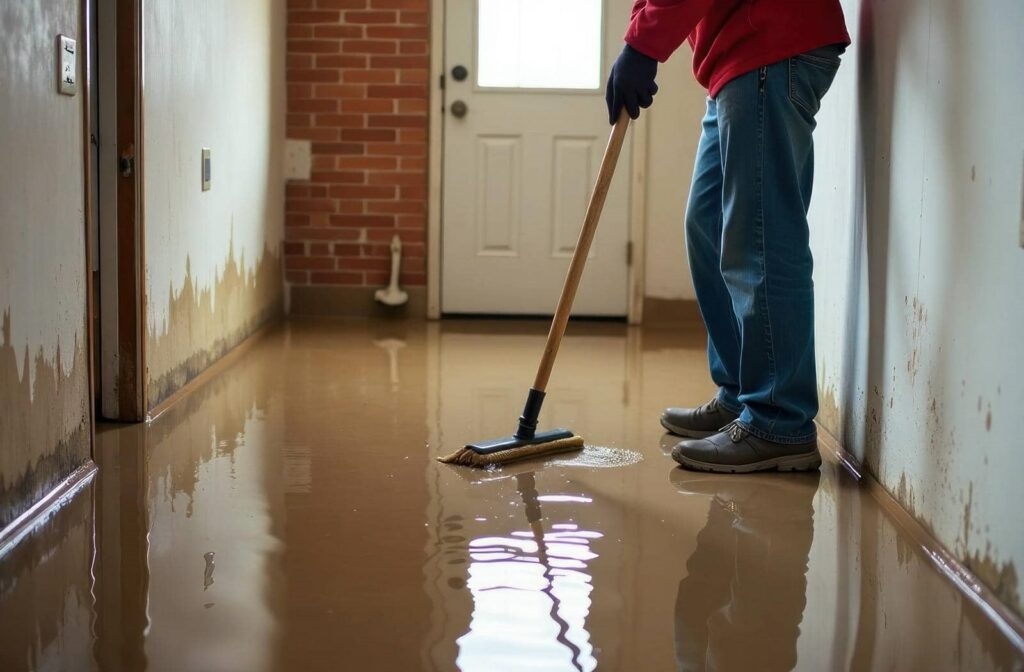
Start by evaluating the situation and identifying the source of the water. Use effective water removal techniques such as using wet/dry vacuums and mops for smaller areas. For considerable flooding, emergency pumps are essential. These powerful devices can quickly extract large volumes of water, greatly reducing your cleanup time.
Make sure that you’re following safety precautions, like turning off electricity to avoid hazards. If the water is contaminated, consider wearing protective gear.
Once you’ve removed the bulk of the water, begin clearing out damaged items and furniture to prevent further deterioration.
Dry and Dehumidify
Once you’ve removed the standing water, it’s essential to dry and dehumidify your property to prevent further damage and mold growth.
Effective drying involves using the right drying equipment and dehumidification techniques. Here are some steps to follow:
Use Dehumidifiers: Set up portable dehumidifiers to extract moisture from the air, targeting areas that remain damp.
Employ Fans: Use high-velocity fans to circulate air and speed up the drying process. Position them strategically for best results.
Open Windows and Doors: If weather permits, open windows and doors to promote airflow and help dry out your space naturally.
Monitor Humidity Levels: Keep an eye on humidity with a hygrometer, ensuring it stays below 60% to inhibit mold growth.
Clean and Disinfect
After drying and dehumidifying, it’s essential to assess areas that may be contaminated.
Identify surfaces that have come into contact with floodwater and use appropriate cleaning solutions to eliminate harmful pathogens.
This step is important for ensuring a safe and healthy environment in your home.
Assess Contaminated Areas
While evaluating contaminated areas following a flood, it’s essential to identify potential hazards before beginning the cleaning and disinfecting process.
Start by determining contamination sources, which can include sewage, chemicals, or debris. Conduct water testing to verify safety levels are appropriate before proceeding.
Here’s how to assess effectively:
Inspect Areas: Look for visible signs of contamination, such as discoloration or odors.
Check Materials: Identify porous materials that may retain contaminants—these may need replacement.
Evaluate Ventilation: Confirm proper airflow to prevent mold growth during the drying process.
Wear Protective Gear: Equip yourself with gloves, masks, and goggles to safeguard against health risks.
Taking these steps helps ensure a thorough and safe restoration.
Use Appropriate Cleaning Solutions
Having assessed contaminated areas, it’s time to focus on using appropriate cleaning solutions to effectively clean and disinfect the affected spaces.
Start by selecting high-quality cleaning agents that are specifically designed for flood damage. These products remove dirt and debris and eliminate harmful bacteria and mold.
Consider using eco-friendly solutions that are safer for your family and the environment. Look for options that contain natural ingredients and have low toxicity levels.
Be certain to follow the manufacturer’s instructions for dilution and application to ensure maximum effectiveness.
Remember, thorough cleaning and disinfection are essential for preventing long-term health risks and restoring your home to a safe condition.
Prioritize your well-being and that of your loved ones during this process.
Repair and Restore
Once the floodwaters recede, it’s crucial to assess the damage and begin the repair and restoration process promptly.
You’ll want to focus on effective repair techniques and quality restoration materials to ensure long-lasting results.
Here’s a streamlined approach to guide you:
Inspect: Check for structural damage and mold growth throughout your property.
Remove: Safely discard damaged materials, including drywall and flooring, to prevent further issues.
Dry: Use fans and dehumidifiers to thoroughly dry the affected areas, reducing the risk of mold.
Rebuild: Utilize appropriate restoration materials like treated wood and moisture-resistant drywall to restore your home effectively.
Frequently Asked Questions
How Long Does Flood Damage Restoration Typically Take?
Flood damage restoration typically takes one to three weeks, depending on the extent of the damage. After a thorough damage assessment, you’ll receive a restoration timeline that outlines the necessary steps and estimated completion date.
Do I Need Professional Help for Minor Flood Damage?
If you’ve got minor flood damage, like a small basement leak, DIY restoration can work for you. However, if you’re unsure about repairs, calling a professional ensures safety and thoroughness in addressing potential underlying issues.
What Insurance Coverage Is Necessary for Flood Damage?
You need flood insurance with adequate coverage limits to protect against potential losses. Ensure your policy covers structural damage and personal property, as standard homeowners’ insurance usually doesn’t include flood-related incidents. Review your options carefully.
Can I Prevent Future Flood Damage to My Property?
You can prevent future flood damage by implementing flood-proofing techniques, like elevating your property and installing a reliable drainage system. Regularly inspect these systems to ensure they function effectively during heavy rainfall or storms.
What Are the Health Risks Associated With Flood Water?
Flood water’s filthy contaminants can cause serious health effects, including gastrointestinal infections, skin irritations, and respiratory issues. You must protect yourself by avoiding exposure and ensuring proper sanitation during cleanup to safeguard your well-being.
Review
By following these seven tips, you can navigate the flood damage restoration process with confidence. Picture a once-drenched space transformed: water pumps roar like thunder, dehumidifiers hum softly, and vibrant, moisture-resistant materials breathe new life into your home. Each step, from careful documentation to thorough cleaning, meticulously restores your sanctuary, ensuring it stands resilient against future floods. With determination and swift action, you’re not just repairing damage; you’re reclaiming your space and fortifying it for what lies ahead.