

Contents
Flood damage can be overwhelming, but knowing how to approach restoration can make a significant difference. Evaluating the extent of the damage right away is essential, as is ensuring your safety before you start any restoration work. From effective water removal techniques to preventing mold growth, each step plays an important role in the process. Are you prepared to tackle the challenges that come with restoring your space?
Key Takeaways
- Conduct a thorough inspection for water damage, documenting findings with photos to aid in insurance claims and professional assessments.
- Prioritize safety by using protective gear and identifying hazards, avoiding areas with gas leaks or unstable structures.
- Remove standing water quickly using pumps or wet vacuums and employ dehumidifiers to thoroughly dry affected areas.
- Clean and disinfect surfaces with appropriate solutions, focusing on mold prevention in areas exposed to moisture.
- Consult professionals for extensive damage assessments and navigate insurance claims, ensuring proper coverage for flood-related losses.
Assessing the Damage
When you’re faced with flood damage, the first step is to assess the extent of the destruction.
Begin your damage evaluation with a thorough visual inspection of the affected areas. Look for signs of water intrusion, such as discoloration, warping, or mold growth on walls and floors. Pay attention to furnishings, electrical systems, and appliances, as they may require immediate attention or replacement.
Document everything you find, taking photos or notes, to help communicate with insurance providers and restoration professionals.
Identify any structural damage, as this could pose safety risks. Don’t forget to check hidden areas like basements or crawl spaces, where moisture can linger unseen.
Safety First: Protecting Yourself and Your Property
When you’re facing flood damage, it’s essential to assess hazards carefully before starting any restoration work.
Make certain you’re using appropriate protective gear, such as gloves and masks, to shield yourself from contaminants and physical injuries.
Prioritizing your safety protects you and enhances the effectiveness of the restoration process.
Assess Hazards Carefully
Although flood damage restoration is essential, evaluating hazards carefully is the first step in ensuring your safety and the protection of your property.
Begin with hazard identification; assess potential risks like unstable structures, electrical hazards, and contaminated water. Make sure you’re aware of your surroundings—damaged areas may hide dangers you can’t see.
Utilize risk management strategies to prioritize your actions; address the most immediate threats first. If you spot gas leaks or dangerous debris, evacuate the area and contact professionals.
Keep in mind that your well-being is paramount; don’t take unnecessary risks. A thorough hazard assessment safeguards you and enhances the effectiveness of your restoration efforts.
Use Protective Gear
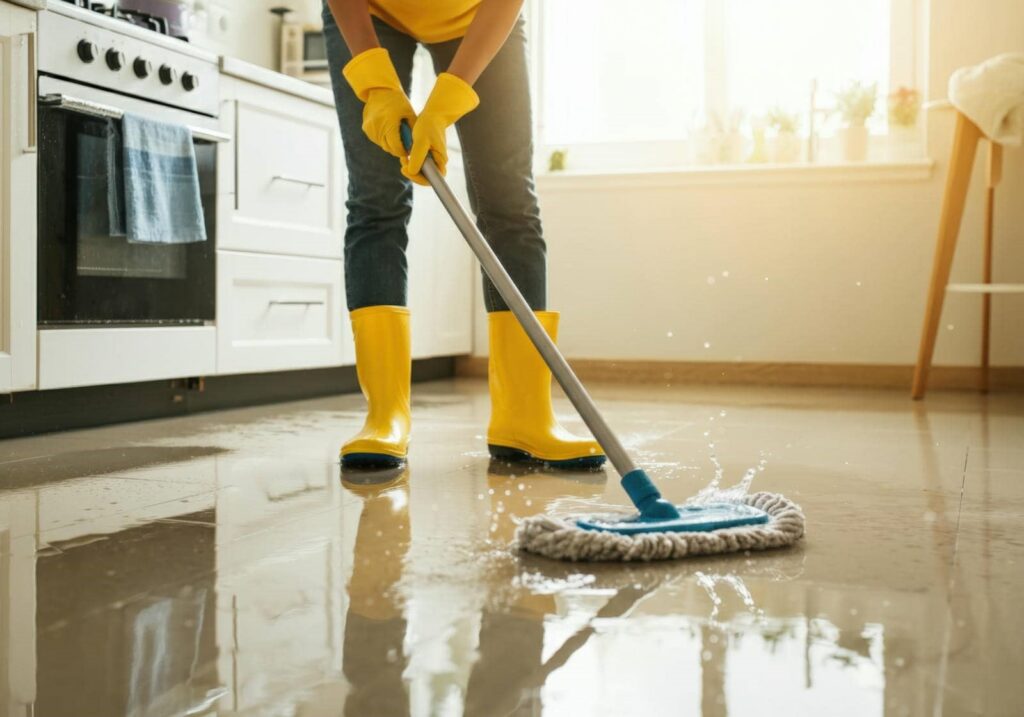
Using protective gear is vital for minimizing health risks during flood damage restoration. You should wear appropriate protective clothing, like waterproof suits and gloves, to shield yourself from contaminants in the water.
Safety equipment, such as masks and goggles, can prevent exposure to harmful mold spores and debris. Make sure your footwear is sturdy and waterproof to protect your feet from sharp objects and chemicals.
It’s important to choose gear designed for flood conditions, as standard clothing may not provide adequate protection. By prioritizing your safety with the right protective gear, you safeguard your health and enhance your ability to effectively restore your property.
Removing Water and Moisture
After a flood, one of the first critical steps in damage restoration is effectively removing water and moisture from the affected areas.
Start by employing various water extraction techniques, such as submersible pumps or wet vacuums, to eliminate standing water quickly. Ascertain you address hidden pockets of moisture using moisture detection methods like infrared cameras or moisture meters, as lingering dampness can lead to mold growth and structural damage.
Once the bulk of the water is removed, utilize dehumidifiers and fans to dry out surfaces thoroughly.
It’s essential to monitor humidity levels to prevent any remaining moisture from causing future problems.
Cleaning and Disinfecting Affected Areas
Once you’ve removed the water and moisture, the next step is to clean and disinfect the affected areas to prevent health hazards and further damage.
Start by using effective sanitation techniques, such as a mixture of water and a disinfectant solution, to scrub surfaces. Pay close attention to high-touch areas, ensuring you eliminate bacteria and viruses.
After sanitizing, thoroughly rinse surfaces to remove any chemical residues. For areas exposed to prolonged moisture, consider applying a mold prevention solution to inhibit growth.
It’s essential to check behind walls, under floors, and in hidden corners where mold can thrive unnoticed.
Ensure proper ventilation while you work to allow any remaining moisture to escape.
Preventing Future Flooding
To effectively prevent future flooding, it’s vital to assess your property’s vulnerabilities and address them proactively.
Start by evaluating the landscape; improper grading can direct water toward your home. Implementing effective landscaping solutions—like installing rain gardens or using native plants—can help absorb excess rainfall and reduce runoff.
Additionally, consider installing flood barriers around your property. These barriers can provide a significant line of defense against rising waters, protecting your home from potential damage during heavy storms.
Regular maintenance is also important. Clean your gutters and downspouts to ensure they’re directing water away from your foundation.
Inspect and repair any cracks in your foundation to prevent water seepage.
When to Call Professionals
When evaluating flood damage, it’s essential to recognize when professional help is necessary.
If you encounter extensive damage, health risks from mold or contaminated water, or need assistance with the insurance claim process, don’t hesitate to call experts.
Timely intervention can save you from further complications and ensure a proper restoration.
Extensive Damage Assessment
If you suspect your property has suffered extensive flood damage, knowing when to call in professionals can be vital for effective restoration.
A thorough flood assessment and damage evaluation are essential to prevent further issues. Here are some signs indicating it’s time to reach out to experts:
- Structural damage to walls or foundation
- Significant water accumulation or mold growth
- Contaminated water exposure
- Electrical issues or damaged wiring
- Extensive damage to personal belongings
Don’t underestimate the potential long-term effects of flood damage.
Professionals can provide the expertise and equipment needed to assess the situation accurately and ensure your property is restored properly.
Trust their knowledge to guide you through the recovery process and help you reclaim your space safely.
Health and Safety Risks
Although flood damage may initially seem manageable, the health and safety risks it poses can escalate quickly, necessitating professional intervention.
Standing water can lead to mold growth within 24-48 hours, creating serious respiratory issues and other health concerns. If you notice a persistent musty odor or visible mold, it’s crucial to call in experts who can handle the problem safely and effectively.
Additionally, floodwaters may compromise your electrical systems, creating electrical hazards that can cause shock or fire risks. If you’re unsure about the safety of your environment or the extent of the damage, don’t hesitate to reach out to professionals.
They’ve the tools and expertise necessary to ensure your home is safe and secure.
Insurance Claim Process
Steering through the insurance claim process after flood damage can be complex, so understanding when to enlist the help of professionals is essential.
Consider calling experts if you encounter challenges with:
- Claim documentation: If you’re unsure about what evidence to gather.
- Policy coverage: If your coverage details are unclear or disputed.
- Assessment disputes: If your adjuster’s evaluation seems inadequate.
- Timelines: If you face delays that jeopardize your recovery.
- Complexity: If the claim involves significant damage or multiple areas.
These professionals can help streamline your claim, ensuring you receive fair compensation.
They’ll guide you through the nuances of your policy, making the process smoother and less stressful.
When in doubt, don’t hesitate to reach out for assistance.
Frequently Asked Questions
How Long Does Flood Damage Restoration Typically Take?
Flood damage restoration typically takes several days to weeks, depending on the extent of damage. The restoration timeline includes the drying process, which is essential for preventing mold growth and ensuring thorough recovery.
What Items Can Be Salvaged After a Flood?
You wouldn’t believe what you can salvage! After a flood, focus on restoring items like furniture, electronics, and important documents. Essential restoration tools like dehumidifiers and fans can help save these flood salvageable items effectively.
Is Flood Insurance Necessary for Homeowners?
Yes, flood insurance is necessary for homeowners. It provides essential flood coverage, protecting your property from significant financial loss. Understanding the insurance benefits ensures you’re prepared for potential disasters and can safeguard your home effectively.
What Are Common Signs of Mold Growth Post-Flood?
You’ll notice mold growth by spotting discoloration, musty odors, or water stains. Employ mold identification techniques like visual inspections and moisture assessments, and remember, mold prevention strategies are essential to keeping your home safe and healthy.
Can I Perform Restoration Tasks Myself or Hire Professionals?
You can tackle restoration tasks yourself with proper DIY considerations, but hiring professionals often ensures effective restoration techniques. Weigh your skills and the damage’s extent to make the best choice for your situation.
Summary
So, after maneuvering the soggy aftermath of your flood, you could either channel your inner DIY hero or summon the pros to tackle the chaos. Just remember, playing “let’s see how much mold we can grow” isn’t a game you want to win. Stay vigilant, document everything for that insurance check, and keep an eye out for future water mischief. Because who doesn’t love a good flood story, right? Just make sure it’s not your living room!