

Contents
Like a ghost in the walls, fire odor can linger long after cleanup because smoke particles settle into porous materials, bond to fabrics, and keep off-gassing from hidden residue. You may clean the visible soot, but ducts, insulation, and upholstery can still trap compounds that surface methods miss. Moisture can reactivate odors, so the smell often returns unless you treat every contaminated layer—and that’s where the real challenge begins.
Key Takeaways
- Smoke particles and soot settle into porous materials, where they keep releasing odor-causing compounds over time.
- Heat drives smoke residue deeper into walls, fabrics, and hidden surfaces, making cleanup harder and odor more persistent.
- Moisture can reactivate trapped smoke residues, causing the fire smell to return after cleaning.
- HVAC systems and ductwork can recirculate soot and smoke particles, spreading lingering odors throughout the home.
- Incomplete cleaning leaves microscopic residue behind, so the odor continues until all contaminated surfaces are fully treated.
Why Fire Odor Lingers After Cleanup
Even after cleanup, fire odor can linger because smoke particles settle into porous materials and keep releasing volatile compounds over time.
You’re dealing with odor persistence when soot residues bond to fibers, paint films, and hidden surfaces, so fresh air alone won’t solve it.
Cleanup challenges grow when heat drives contaminants deeper, and standard washing only removes what’s on top.
Moisture can reactivate trapped compounds, making the smell return after drying.
You need targeted removal, not just surface wiping, because incomplete cleanup leaves microscopic particles that continue off-gassing.
If you want your space to feel normal again, focus on full-source remediation, filtration, and material-specific treatment.
That approach cuts the cycle, reduces recontamination, and helps your home feel clean, safe, and yours again.
Where Smoke Odor Hides in Your Home
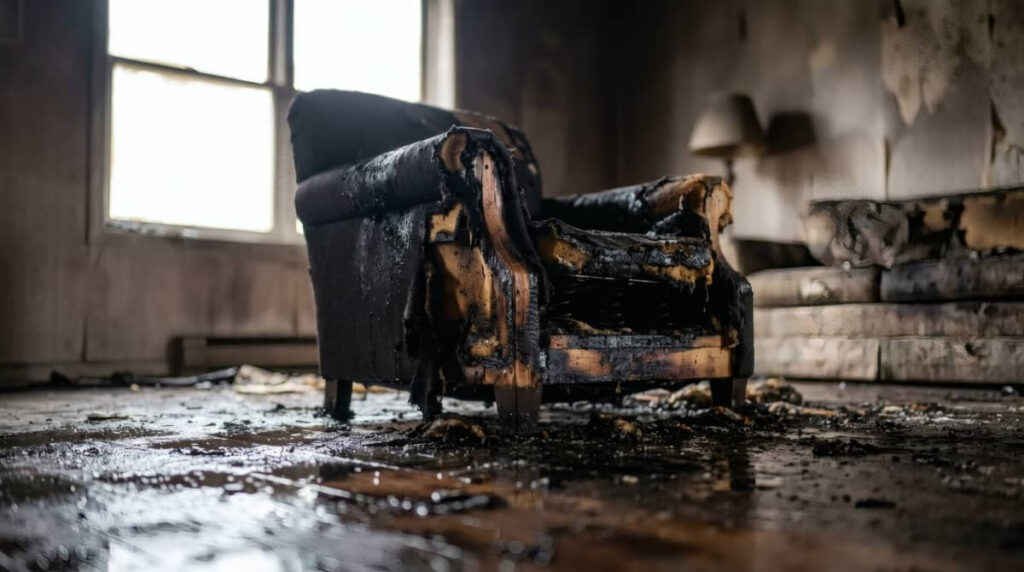
Smoke odor often settles into hidden fabric fibers, including upholstery, curtains, rugs, and clothing seams.
It can also collect in air duct residue, where the system recirculates contaminated particles through your home.
If you want to remove the odor fully, you’ll need to inspect and treat both soft materials and HVAC pathways.
Hidden Fabric Fibers
Fabric fibers can trap odor long after visible soot is gone because their weave and padding hold tiny combustion particles deep inside the material. You’ll often notice it in drapes, upholstery, rugs, and bedding, where odor absorption stays active after surface cleaning.
Smoke bonds to natural and synthetic fibers, and fabric treatments can slow release but won’t remove embedded residue.
- Vacuum with a HEPA filter first.
- Use low-moisture extraction on washable textiles.
- Test cleaners on a hidden seam.
- Replace items that still smell after treatment.
If you’re rebuilding your space, start with fabrics you use every day. That’s where your home should feel safe and familiar again, and targeted cleaning helps you get there faster.
Air Duct Residue
Air ducts can hold onto smoke residue long after you’ve cleaned visible surfaces, and every time your HVAC system runs, it can recirculate that odor through the house.
You may not see the buildup, but soot and tar stick to duct walls, filters, and vents, lowering air quality and keeping the smell alive.
If you want your home to feel clean again, inspect registers, replace filters, and schedule professional duct cleaning when residue is present.
Seal leaks, too, because gaps can pull contaminated air from hidden spaces back into circulation.
You deserve a home that feels safe and shared space that smells fresh.
When the ductwork is treated, you reduce odor transfer, protect your system, and help everyone breathe easier.
How Soot Clings to Fabrics and Surfaces
Soot clings to fabrics and hard surfaces because its particles are fine, oily, and sticky.
You’ll see stronger buildup on porous materials like upholstery, drywall, and carpet, where the residue can absorb into the surface instead of sitting on top.
That makes odor removal harder, since trapped soot keeps releasing smell after cleanup.
Soot’s Sticky Nature
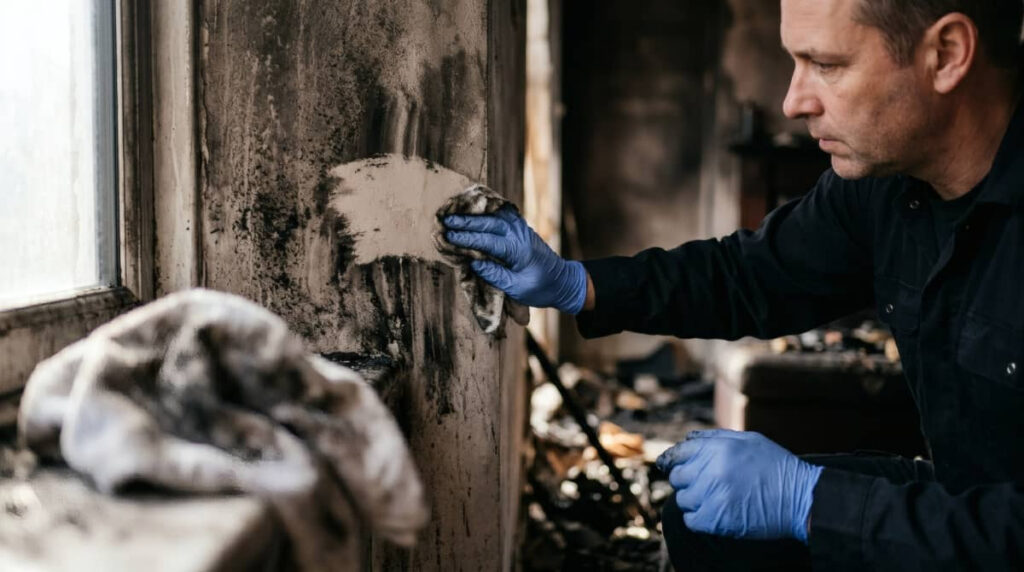
Smoke residue is notoriously tacky, so it bonds quickly to textiles, painted walls, plastic, and porous surfaces. You’ll notice sticky residue on high-touch areas first, and it can spread when you wipe too hard.
For effective soot removal, use dry methods first, then a cleaner matched to the material.
- Blot, don’t scrub, to limit smearing.
- Replace contaminated cloths often.
- Vacuum with a HEPA filter before wet cleaning.
- Test cleaners on a hidden spot.
You’re not dealing with loose dust; soot holds oils and fine particles that grip fibers and coatings.
If you clean in stages, you’ll reduce redeposition and help your space feel safer, fresher, and more like yours.
Porous Surface Absorption
When smoke residue reaches porous materials, it doesn’t just sit on the surface—it wicks into fibers, grout, unfinished wood, drywall, and upholstery, where it can lodge below the visible layer.
You may wipe what you can see, but odor absorption keeps compounds trapped inside the matrix. That’s why fabrics, padding, and porous materials keep releasing fire smell after the room looks clean.
To reduce it, you need deep extraction, targeted detergents, and controlled drying, not surface wiping alone.
Seal or replace damaged items when cleaning can’t reach the contamination.
If you’re restoring a home or workspace, focus on hidden cavities and soft goods first; that’s where the smell tends to stay, and where your next step matters most.
Why Water Damage Makes Odors Worse
Water intrusion can intensify fire odors because moisture reactivates smoke and soot residues embedded in porous materials like drywall, insulation, wood, and carpet.
When you have water absorption, trapped compounds dissolve and spread, causing odor amplification throughout the space. That’s why you may notice a stronger smell after firefighting, leaks, or delayed drying.
- Wet materials release more volatile residue
- Humidity keeps odor molecules active
- Saturated fibers hold contaminated moisture
- Fast drying helps reduce lingering smells
You can reduce the impact by removing standing water, improving airflow, and controlling indoor humidity quickly.
If you act early, you protect your space and help your home feel livable again.
Why Surface Cleaning Misses Deep Odors
Even after a thorough wipe-down, fire odors can linger because surface cleaning only removes loose soot and residue from exposed areas.
You’re still dealing with contamination that has settled into porous materials, gaps, and hidden cavities. Odor molecules don’t stay on the surface; they migrate into drywall, insulation, wood grain, fabric, and adhesive layers.
A damp cloth can’t reach those trapped compounds, so the smell returns when humidity rises or materials warm up. Even if your rooms look clean, the affected areas may still off-gas for weeks.
That’s why deep cleaning matters: it targets the structure, not just what you can see. You and your household deserve spaces that feel truly restored, not just visibly tidy after fire damage.
How Professionals Remove Smoke Odor
Professionals remove smoke odor by treating the air, the surfaces, and the hidden materials that keep releasing odor compounds. You get a targeted plan that matches the fire residue in your space, so you’re not guessing.
Technicians use odor removal techniques with professional equipment to reach smoke trapped in ducts, framing, insulation, and soft goods.
- HEPA air scrubbing to capture fine soot
- Thermal fogging to penetrate porous areas
- Hydroxyl or ozone treatment for airborne compounds
- Sealed-detail cleaning on walls, trim, and contents
This process helps you feel like your space belongs to you again. Each step reduces odor at its source, not just in the room air, and that’s why the result feels thorough and consistent.
How to Keep Fire Odor From Returning
To keep fire odor from returning, control the sources that can re-release smoke compounds after cleanup. You should seal porous materials, replace charred insulation, and clean hidden cavities where residue settles.
Run HEPA filtration and maintain steady ventilation so airborne particles don’t build up again. Wash soft goods with thermal-safe detergents, then dry them completely to prevent trapped odor.
Inspect HVAC filters, ducts, and returns, and change them on schedule. Use odor prevention tips like moisture control, routine dust removal, and prompt spill cleanup.
Apply deodorizing techniques only after surfaces are fully clean, because masking odor won’t stop rebound. If you stay consistent, you’ll protect the space and help everyone in it feel like the air is truly fresh.
Frequently Asked Questions
How Long Does Fire Odor Usually Last After Cleanup?
Usually, you’ll notice fire odor for days to weeks after cleanup; heavy damage can make it last longer. Odor persistence depends on cleanup effectiveness, material porosity, and ventilation, so faster treatment helps you belong smell-free.
Can Fire Odor Affect Indoor Air Quality?
Yes, fire odor can affect indoor air quality. You’re exposing yourself to odor sources from smoke particles and residues, and poor air circulation traps them. Improve ventilation, clean surfaces, and you’ll reduce lingering contaminants quickly.
Is Fire Odor Harmful to Pets or Children?
Yes, fire odor can harm pets and children. You should treat it as a fire safety issue; their pet sensitivity makes them more vulnerable. Ventilate, clean thoroughly, and monitor for coughing, irritation, or lethargy.
Does HVAC System Cleaning Help Remove Smoke Smell?
Yes, HVAC system cleaning can help remove smoke smell. You’ll improve HVAC maintenance, reduce residue, and support air purification. Still, you should pair it with filtration, duct sealing, and source removal for lasting results.
Can Insurance Cover Professional Smoke Odor Removal?
Yes—insurance can cover professional smoke odor removal, if your insurance policies include smoke remediation after a covered loss; like dawn after ash, you’ll file a claim, document damage, and confirm deductible terms.
Conclusion
You may scrub the visible ash, but the fire can still whisper from hidden places. Smoke particles settle like fine dust in upholstery, drywall, and ducts, then cling to porous surfaces and keep releasing odor. If moisture enters, those trapped residues wake up and spread again. That’s why you need deep cleaning, not just surface work. When you treat the hidden pathways, you finally quiet the lingering smoke and restore cleaner, healthier air.