

Contents
Imagine waking up to find your basement flooded due to a burst pipe. It’s essential to act quickly to minimize damage and avoid costly repairs. You’ll need to focus on specific steps to mitigate water damage effectively. From shutting off the water supply to contacting professionals, each action plays a significant role in the recovery process. Let’s explore the best immediate water extraction tips you should follow in such an emergency.
Key Takeaways
- Immediately turn off the water supply by locating and closing the emergency shutoff valve to stop further water flow.
- Disconnect electrical appliances in the affected area to prevent electrical shock and damage; turn off the power at the circuit breaker first.
- Use a wet/dry vacuum to extract standing water, starting at the highest level and using slow, overlapping strokes for effective removal.
- Remove valuable items and furniture from the area to prevent water damage, prioritizing sentimental and essential belongings.
- Document any visible damage with photos to assist with insurance claims and assess the extent of the water damage.
Turn Off the Water Supply
When a pipe bursts, the first thing you should do is turn off the water supply to prevent further flooding.
Locate the emergency shutoff valve, usually found near your water meter or where the main line enters your home. Turn it clockwise until it’s fully closed. This action stops the flow of water, minimizing damage and giving you a chance to assess the situation calmly.
If you can’t find the main shutoff, check for localized valves that control water flow to specific areas.
It’s vital to familiarize yourself with these valves before an emergency occurs. Make it a habit to periodically test these valves to ensure they function correctly.
By knowing how to quickly turn off your water supply, you’re taking an important step toward protecting your home and belongings.
Disconnect Electrical Appliances
As you work to mitigate damage from a burst pipe, disconnecting electrical appliances in the affected area is essential. Water and electricity don’t mix, and prioritizing electrical safety can prevent injury and further appliance damage.
Start by turning off the power at the circuit breaker to eliminate any risk of shock. If it’s safe, unplug appliances such as toasters, microwaves, and computers from the wall. Keep in mind that even if the appliance isn’t in direct contact with water, any moisture in the air can cause issues.
Once disconnected, assess each appliance for potential damage. If you notice any water exposure, don’t attempt to use the appliance until it’s thoroughly inspected and dried by a professional.
Taking these precautions protects you and fosters a sense of community responsibility as you work to restore your home safely.
Remove Furniture and Valuables
When a pipe bursts, your first step should be to remove furniture and valuables from the affected area.
Prioritize essential items to prevent water damage, and make sure to protect flooring and carpets during the process.
Once you’ve cleared the space, assess the damage levels to determine the next steps for restoration.
Prioritize Essential Items
In the aftermath of a burst pipe, prioritizing essential items is crucial for minimizing damage. You need to act quickly to safeguard your belongings.
Start by removing the following:
Essential documents: Gather important papers like passports, insurance policies, and medical records to prevent loss.
Valuable items: Secure jewelry, electronics, and any collectibles that could be damaged by water.
Sentimental belongings: Retrieve family photos and heirlooms that hold emotional value.
Protect Flooring and Carpets
To protect your flooring and carpets after a burst pipe, immediately remove any furniture and valuables from the affected area.
Water can cause irreversible damage, so swift action is vital for effective carpet protection and flooring preservation. Start by lifting any items off the ground, ensuring they’re placed in a dry location.
Consider using plastic or wood blocks under furniture legs to prevent moisture absorption. If you can, take up wet carpets and place them in a ventilated space to dry.
Assess Damage Levels
As you assess the damage levels after a burst pipe, prioritize the removal of furniture and valuables from the affected area. This quick action can prevent further loss and aid in overall damage assessment.
Follow these steps:
Identify the highest water levels: Check where the water has pooled to determine the most affected items.
Remove items immediately: Take out furniture, electronics, and valuables to a dry area to minimize damage.
Document the damage: Take photos of affected items for insurance claims and future reference.
Assess the Affected Area
Quickly evaluating the affected area is essential after a burst pipe to minimize water damage. Start your damage assessment by identifying all affected materials, including flooring, walls, and furniture.
Check for visible signs of water infiltration, like discoloration or swelling, which can indicate the extent of the damage. Look for any electrical hazards, as standing water can pose serious risks.
If you notice significant damage, document it with photos for insurance claims. Make a note of how far the water has spread and which items are salvageable versus those that need replacement.
Prioritize areas that hold the most value, both sentimentally and financially. Your thorough assessment will help you understand the severity of the situation and guide your next steps.
Use Wet/Dry Vacuum for Extraction
To effectively extract water after a burst pipe, you’ll need to choose the right wet/dry vacuum for the job.
Understanding proper vacuuming techniques ensures you remove as much water as possible while minimizing damage.
Always remember to follow safety precautions to protect yourself and your property during the extraction process.
Selecting the Right Vacuum
A wet/dry vacuum is an essential tool for effective water extraction after a burst pipe.
When selecting the right vacuum, consider these factors to ensure you have the best suction power for the job:
Vacuum Types: Choose between portable models for small spaces or larger, industrial types for extensive areas.
Suction Power: Look for a vacuum with a high CFM (cubic feet per minute) rating to quickly remove water.
Tank Size: Opt for a larger tank if you’re dealing with significant water accumulation, reducing the need for frequent emptying.
Proper Vacuuming Techniques
When it comes to extracting water after a burst pipe, mastering proper vacuuming techniques can make all the difference.
Start by using a wet/dry vacuum, which offers the suction power you need for effective extraction. Begin at the highest water level, making slow, deliberate passes to ensure you capture as much moisture as possible.
Don’t forget to overlap your strokes to avoid leaving behind any puddles. After you’ve initially vacuumed, let the vacuum run for a few extra minutes to draw out remaining water.
Be mindful of the vacuum’s filters, making sure they’re clean to maintain maximum suction power. By following these techniques, you’ll expedite the drying process, helping your space return to normal quickly.
Safety Precautions to Follow
Using a wet/dry vacuum for water extraction speeds up the drying process and requires careful attention to safety precautions.
Prioritizing water safety and personal protection is vital in this scenario. Here are three essential safety tips to follow:
Disconnect Power: Verify the electricity is turned off in affected areas to prevent electrical shock while using the vacuum.
Wear Protective Gear: Equip yourself with rubber gloves, waterproof boots, and a mask to shield against contaminants and mold.
Ventilate the Area: Open windows and doors to promote airflow, minimizing the risk of mold growth as you extract water.
Set Up Fans and Dehumidifiers
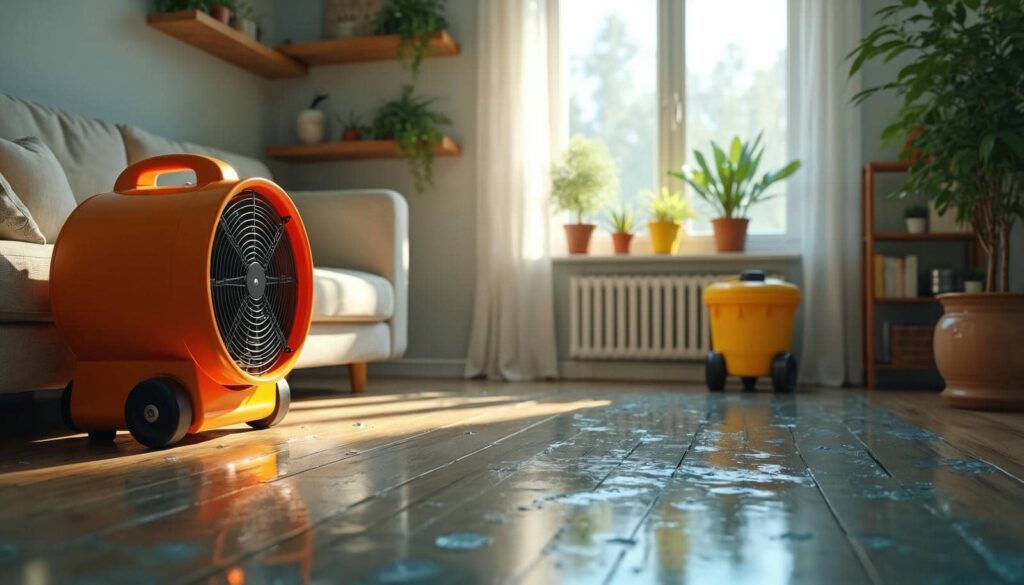
To effectively reduce moisture after a burst pipe, set up fans and dehumidifiers as soon as possible.
Start by strategically placing fans to ensure ideal airflow throughout the affected area. Position them near walls and corners, directing airflow toward damp spots to facilitate quicker drying. Avoid placing fans too close to the wet surfaces, as this can create ineffective air circulation.
Next, configure your dehumidifier settings to maximize efficiency. Set it to a low humidity level, ideally around 30-60%, to effectively extract moisture from the air.
Be sure to regularly check the water collection tank and empty it as needed to ensure continuous operation.
Contact a Professional Water Damage Service
A professional water damage service is essential for effectively managing the aftermath of a burst pipe. Relying on experts ensures you minimize long-term damage and restore your home efficiently.
Here’s why you should contact professional services immediately:
Rapid Response: Professionals can quickly assess the situation, preventing further water damage and mold growth.
Advanced Equipment: They use specialized tools and techniques to extract water and dry affected areas thoroughly.
Insurance Assistance: Experts can help navigate the claims process, ensuring you receive the support you deserve.
Don’t underestimate the importance of calling a professional. Their knowledge and experience can save you from costly repairs down the line and ensure your home is safe again.
Frequently Asked Questions
How Can I Prevent Future Pipe Bursts?
To prevent future pipe bursts, you should use proper pipe insulation and schedule regular maintenance. This keeps your plumbing in top shape, reducing the risk of freezing and wear, ensuring your home stays safe and comfortable.
Will My Insurance Cover Water Damage Repairs?
Yes, your insurance might cover water damage repairs, but it depends on your specific policy and coverage limits. File a prompt insurance claim to determine what’s included and ensure you get the support you need.
How Long Does It Take for Water Damage to Show?
Water damage can show within hours, but the full extent may take days or weeks. Early signs include discoloration, musty odors, and peeling paint. Monitoring these symptoms helps you address issues before they worsen.
What Health Risks Are Associated With Water Damage?
Water damage poses serious health risks, including mold growth and bacterial proliferation. You could experience respiratory issues, allergic reactions, or infections if exposed. Addressing water damage quickly helps protect your health and maintain a safe environment.
Can I Do Water Extraction Myself Safely?
Can you safely handle water extraction yourself? Yes, but you must follow safety precautions, like wearing protective gear and ensuring electricity is off. If unsure, consider hiring professionals to avoid health risks and further damage.
Summary
Taking swift action after a burst pipe can save you from significant headaches and financial strain. Every minute counts when it comes to minimizing damage, so don’t hesitate to implement these tips. By effectively managing the situation, you protect your property and ensure your peace of mind. Remember, when in doubt, reaching out to professionals can make all the difference.