

Contents
When dealing with flood recovery, effective dehumidification is essential to prevent long-term damage and mold growth. You’ll find that industrial dehumidifiers offer rapid moisture removal, but natural ventilation and desiccants can greatly complement their efficiency. Understanding how to combine these methods effectively can make a considerable difference in your recovery efforts. Explore the nuances of each approach and learn how to optimize your dehumidification strategy for the best results.
Key Takeaways
- Utilize industrial dehumidifiers for high-capacity moisture removal, ensuring rapid recovery in flood-affected areas.
- Employ natural ventilation techniques by opening windows and using fans to enhance air circulation.
- Incorporate desiccants like silica gel or calcium chloride to accelerate drying in enclosed spaces.
- Monitor humidity levels with sensors to inform and adjust dehumidification strategies effectively.
- Regularly assess moisture readings in materials to prevent long-term damage and promote a safe environment.
Understanding the Importance of Dehumidification in Flood Recovery
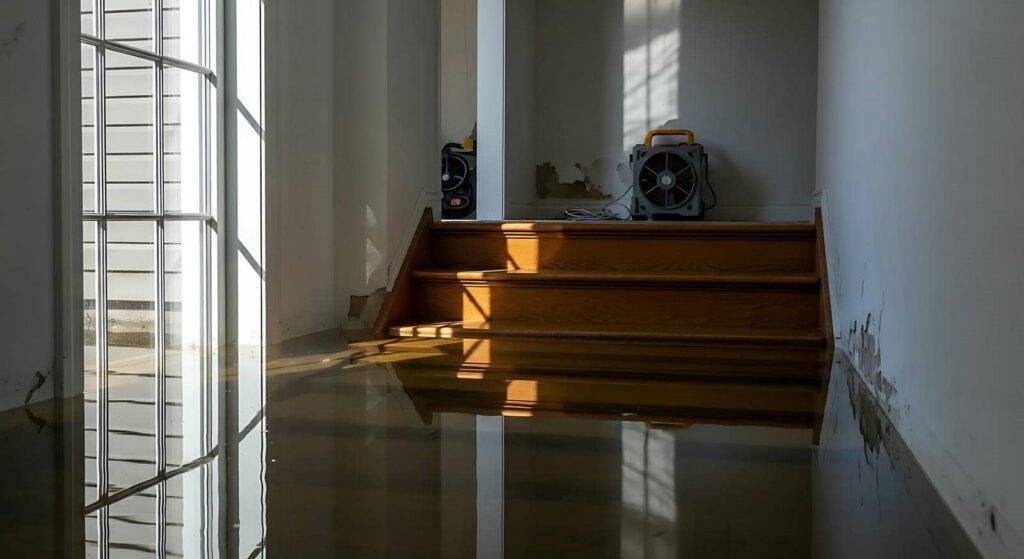
Dehumidification is an essential step in flood recovery, as excess moisture can lead to severe structural damage and promote mold growth.
When you address flood damage, effective moisture removal is imperative to safeguarding your home and health. By controlling humidity levels, you protect the integrity of your property and create a healthier living environment for you and your loved ones.
Ignoring moisture can result in long-term issues, such as warping, rotting, and persistent mold infestations, which can compromise air quality and your well-being.
Using dehumidifiers and proper ventilation techniques can greatly expedite the drying process, ensuring that moisture levels return to normal.
Industrial Dehumidifiers: Advantages and Best Practices
When dealing with extensive flood damage, industrial dehumidifiers offer significant advantages over standard units.
These powerful machines excel in industrial applications, ensuring rapid moisture removal and promoting a healthier environment.
Here are three key benefits you’ll appreciate:
High Capacity: Industrial dehumidifiers can remove large volumes of moisture quickly, making them ideal for extensive flood recovery projects.
Energy Efficiency: Designed for prolonged use, these units often feature advanced technology that maximizes energy efficiency, reducing operational costs.
Durability: Built to withstand harsh conditions, industrial dehumidifiers are more robust and reliable, providing consistent performance throughout your recovery efforts.
Natural Ventilation Techniques for Moisture Control
While industrial dehumidifiers play an essential role in flood recovery, natural ventilation techniques can also greatly aid in moisture control. By strategically utilizing window openings, you can enhance air flow throughout the affected space.
Start by opening windows on opposite sides of the room to create a cross-ventilation effect. This approach facilitates the movement of moist air out and allows drier air to enter, effectively lowering humidity levels.
You’ll want to monitor weather conditions, as breezy days are ideal for this method. Consider using fans to further improve air circulation, especially in areas where natural air flow is limited.
Additionally, keeping doors ajar can enhance ventilation throughout the building. By implementing these natural ventilation techniques, you support the dehumidification process and create a more comfortable environment as you recover from the flood.
Embrace these methods to foster a healthier, drier space.
Utilizing Desiccants for Enhanced Drying Efficiency
To enhance drying efficiency during flood recovery, utilizing desiccants can be an effective strategy.
Desiccants are drying agents that absorb moisture from the air, markedly speeding up the drying process.
Here are three common desiccant types you can consider:
Silica Gel: Often found in small packets, it’s highly effective for absorbing humidity in enclosed spaces.
Clay Desiccants: Natural and environmentally friendly, these can be used in various applications, including large-scale drying.
Calcium Chloride: This powerful desiccant attracts moisture and can be used in both indoor and outdoor settings.
Monitoring Humidity Levels: Tools and Techniques for Success
How can you effectively monitor humidity levels during flood recovery? It’s vital to use reliable tools like humidity sensors and moisture meters.
Humidity sensors provide real-time data, allowing you to track fluctuations in moisture levels throughout the recovery process. Position these sensors in affected areas to ensure accurate readings.
Moisture meters, on the other hand, are invaluable for evaluating specific materials, such as drywall or flooring. By inserting the meter into the material, you can determine the moisture content and identify problem areas that need immediate attention.
Regularly checking these readings helps you make informed decisions about dehumidification strategies, assuring you create a safe and comfortable environment.
Frequently Asked Questions
How Long Does Dehumidification Typically Take After a Flood?
Dehumidification typically takes one to two weeks, depending on the severity of the flood and your equipment’s effectiveness. A thorough dehumidification timeline is essential for successful flood recovery and preventing further damage.
Can I Use Home Appliances for Dehumidification?
Yes, you can use home appliances like dehumidifiers, air conditioners, and fans for moisture control. They help reduce humidity levels effectively, but make certain they’re appropriately sized for your space to optimize performance and efficiency.
What Are the Signs of Inadequate Dehumidification?
If you notice peeling paint, musty odors, or condensation on windows, you’re likely facing inadequate dehumidification. These dehumidification indicators can lead to moisture damage, affecting your home’s integrity and your comfort considerably.
Is It Safe to Enter a Flooded Area Before Dehumidification?
Entering a flooded area before dehumidification isn’t safe. You should observe flood safety guidelines and take entry precautions, as standing water can hide hazards like electrical risks, contaminants, or unstable structures that could endanger you.
How Much Does Professional Dehumidification Service Cost?
Professional dehumidification services typically range from $500 to $3,000, depending on cost factors like the affected area size and severity. Comparing services can help you find the best value for your specific needs.
Final Thoughts
In the aftermath of a flood, think of your space as a garden after a storm. Just as a gardener nurtures plants back to health with sunlight and water, you must harness dehumidification methods to restore your environment. Combine industrial dehumidifiers, natural ventilation, desiccants, and humidity monitoring to create a thriving atmosphere free from mold. By carefully tending to these elements, you cultivate a safe haven, ensuring your recovery blooms into a lasting success.